
Translation Patterns of the Film “6/45,” Vietnam’s Highest-Grossing Film — Focusing on Subject Omission and Restoration, and Domestication
1 Kangwon National University
DOI: https://doi.org/10.20880/kler.2025.60.5.41
Abstract
This study analyzes the Vietnamese subtitles of the comedy film <6/45>, which was released in Vietnam in 2022 and set the highest box office record for a Korean film in Vietnam. The purpose of this research is to examine the specific aspects of Korean-Vietnamese translation through actual subtitle examples from the theatrical release and to identify the linguistic and cultural transformation strategies employed in the process. This aims to provide practical materials for Korean language education and the cultivation of translation talent within Vietnam. This study focuses on examining how subject omission phenomena are handled during translation and the strategies for transforming cultural and political elements. Subjects frequently omitted in the Korean source text were mostly explicitly restored, considering Vietnamese grammatical and pragmatic characteristics. However, in specific colloquial contexts—such as expressing intimacy between characters or the urgency of dialogue—the original omission structure was retained to enhance naturalness. Furthermore, the translator actively employed ‘domestication’ strategies, replacing unfamiliar Korean cultural elements or sensitive political expressions with contemporary slang, memes, and proverbs familiar to Vietnamese audiences. This study holds significance in that it empirically presents practical transformation strategies in Korean-Vietnamese translation, particularly localization methods reflecting the latest media environment, by analyzing subtitles from an actual box-office hit. The findings can serve as a useful foundational resource not only for the field of translation studies but also for practicing translators and Korean language learners, helping them cultivate the cultural literacy and practical insights essential in the translation process.
I. Introduction
The emergence of OTT1 has shaped a global media environment and intensified demand for multilingualism, making the standardisation of subtitle translation guidelines for communication an urgent necessity. To achieve this, the accumulation of relevant theoretical foundations and prior research is essential.
Pedersen(2018: 81) noted that changes in subtitle norms stem from shifts in time. That is, as the entities involved in content production, distribution, and screening change, subtitles, being part of this process, also evolve within the same flow. Additionally, Choi(2019) revealed that advances in video technology have altered subtitle styles and production methods, and as the viewing experience improves, the adaptability of subtitles to new platforms like Netflix is also accelerating.
1 OTT (Over-The-Top): In the media and technology sectors, this refers to the concept of directly delivering content such as video, audio, and applications over the internet. Specifically, it denotes services provided without using traditional broadcasting infrastructure such as cable TV, satellite broadcasting, or telecommunications carriers' proprietary networks.
1. Research Purpose
This study aims to explore changes observed in subtitle translation activities and interpret their underlying context by analysing the Vietnamese subtitles of the film <6/45>,2 produced and released in Korea in 2022 and also screened in Vietnam. It further seeks to reveal linguistic and cultural differences between Koreans and Vietnamese. These findings contribute not only to translation studies theory and practice but also hold practical significance for Korean language education targeting foreign learners.
Subtitle analysis provides vivid learning materials, such as film scenes or everyday dialogue, enabling learners to acquire language while simultaneously training in translation within practical contexts. Through subtitles, learners can gain a deep understanding not only of Korean expression patterns but also of cultural contexts, metaphorical utterances, and emotional nuances. This enables the internalisation of communication culture in Korean education, going beyond the mere acquisition of grammar and vocabulary.
While traditional Korean language education focuses heavily on theory and norms (correct sentences, grammatical consistency), movie subtitle translation demonstrates practical language use, including everyday speech and colloquial expressions that deviate from grammatical norms. Therefore, learning using subtitles can achieve a balance between academic approach and practical application.
Students majoring in translation require advanced language-processing skills: rapid comprehension, precise expression, and creative translation. Korean language education provides the necessary tools for cultivating these skills, deepening text analysis and conversion abilities through linguistic knowledge such as pragmatics, semantics, and syntax. Furthermore, Korean language learning extends beyond the language itself, encompassing the process of understanding Korean culture, thought, and social context. This ensures accuracy that transcends mechanical translation. Consequently, learners can move beyond merely faithfully reproducing the original text to selecting translation strategies suited to diverse fields, such as academic, literary, certified, and commercial translation.
Thus, Korean language education and translation education are closely intertwined, and this study has the following objectives.
First, to help Korean learners recognise linguistic and cultural differences. Subtitles contain numerous colloquialisms, slang, idioms, and expressions unique to Korean culture. This study seeks to identify and interpret these differences to explore appropriate translation approaches. Furthermore, subtitle translation reflects changes over time, revealing language style, levels of localisation, and tendencies to preserve the original form, and is thus closely connected to the contemporary social and cultural context.
Second, it cultivates practical translation competence. Subtitle translation requires consideration of diverse factors beyond simple language conversion, including cultural elements, technical constraints, and audience preferences. Particularly, subtitles are subject to constraints like character count, reading speed, and display time, necessitating translators to choose concise, accurate, and easily understandable expressions. This study deepens understanding of this process and fosters learners’ applied skills.
Third, it contributes to the development of subtitle translation theory. By examining trends in subtitle translation, it complements the theoretical foundation of audiovisual translation3 and further suggests directions for practical translation activities. This aims to enhance subtitle quality, simultaneously meeting the needs of academic research, education, and popular demand.
Fourth, it improves the quality of cultural transmission. Film is a powerful medium for cultural exchange, and accurate, natural subtitles faithfully convey the meaning and nuances of Korean, helping Vietnamese audiences better understand Korean culture. This plays a crucial role in preventing cultural misunderstandings or distortions and promoting mutual understanding.
2 <6/45> is a 2022 South Korean comedy film directed and written by Park Kyu-tae. The film depicts the story of a South Korean soldier who accidentally wins the top prize in the lottery. However, when the lottery ticket blows away into North Korea, a tense negotiation unfolds between soldiers from both Koreas. With a runtime of 113 minutes, it was produced by Sidus Pictures and released in South Korea on August 24, 2022. In Vietnam, it premiered on September 23, 2022, under the title “Bỗng Dưng Trúng Số (Suddenly Won the Lottery),” setting a record for the highest box office for a Korean film in Vietnam. It attracted over 2 million viewers, generating total revenue of approximately 181 billion VND (about 9.6 billion KRW).
2. Previous Studies
Given their relevance to this paper’s research topic, some studies have focused on subject omission—one of Korea’s most distinctive linguistic features—while others have emphasized translation and conversion analysis between Korean and Vietnamese. The following representative previous studies can be cited in this regard.
First, studies on subject omission in Korean include those by Oh & Park(2011), Phan(2022), and Ong(2025).
Oh & Park(2011) conducted a comparative cognitive linguistic study analyzing the patterns of subject selection by speakers in the Korean film <October Love> (2000) and its American remake <The Lake House> (2006), aiming to reveal conceptual differences between Korean and English. The results showed that English speakers primarily use direct, human-centered subjects centered on the speaker, while Korean speakers prefer indirect expressions centered on the listener and frequently employ situation-centered subjects. This demonstrates how differences in the two languages’ ways of thinking are reflected in utterance structures and suggests that it can broaden our understanding of perceptual differences between languages.3
In Phan(2022), Han Kang’s The Vegetarian was analyzed to compare subject-omission phenomena in Korean and Vietnamese and to examine how they are handled in translation. Subject omission is a common phenomenon in Korean but relatively rare in Vietnamese, which creates difficulties in translation. Analysis revealed that most subject-omitted sentences were handled through restoration or structural transformation, thereby enhancing readability in the translations. This research is expected to aid in specifying Korean-Vietnamese literary translation strategies.
Ong(2025) aimed to conduct an in-depth study of subject omission, a core feature of Korean. The text analysis statistically presented the ratio of subject omission to realization, identified what information is primarily omitted, and clarified the reasons for explicit subject expression. Finally, by comparing with English translations, it examined differences in subject omission between Korean and English, seeking to illuminate the relationship between language, culture, and cognition.
Meanwhile, the papers by Jang & Park(2024), Jang(2025), Gu(2024), and Ho(2025) conduct in-depth research on the challenges and strategies in the Korean-Vietnamese/ Vietnamese-Korean translation field. They particularly emphasize the issue of conveying cultural elements and linguistic techniques within the contexts of film subtitle translation and translation education.
Jang & Park(2024) explored appropriate translation approaches for cultural elements appearing in Korean-Vietnamese subtitle translation. The film <Parasite>, which addresses wealth disparity in modern society, resonated deeply with Vietnamese audiences. However, translating cultural elements within the film without sufficient understanding of Vietnamese culture can leave audiences feeling unfamiliar and alienated. Here, cultural elements were categorized into four types: proper nouns, specific culture-related vocabulary, vocabulary related to specific events or figures, and idioms. The study also highlighted the problem of culturally substitutable expressions being simplified into generic terms and proposed alternative translations that consider Vietnam’s cultural characteristics.
Jang(2025) analyzed translation strategies for cultural elements in the Korean-Vietnamese subtitles of the film <1987>. Applying Nida’s (1945) classification of cultural elements4 and Pedersen’s (2011) types of translation strategies,5 a total of 100 cultural elements and 116 translation strategies were identified. The analysis revealed that generalization, substitution, and omission strategies accounted for over 80% of all strategies and were used most frequently. This study thus clarifies the characteristics and limitations of Korean-Vietnamese translation strategies for cultural items, contributing to future research and translation practice.
Gu(2024) emphasized that the success of Korean films in Vietnam stems not merely from their content or direction but significantly from translators’ efforts to bridge the cultural gap between Korea and Vietnam. This study aimed to analyze the translation strategies employed for cultural items—vocabulary related to Korean history, culture, and society—appearing in the Vietnamese subtitles of the film <Exhumation>. The results revealed that specific translation strategies were prominently used in the Vietnamese subtitles of <Exhumation> to effectively convey these cultural items. Specifically, the retention strategy reflected cultural similarities between Korea and Vietnam while demonstrating an intent to preserve Korean cultural identity. Conversely, the substitution and generalization strategies helped Vietnamese audiences more easily understand Korean cultural elements. This approach was also utilized to compensate for lexical gaps caused by neologisms and slang terms that are constantly generated and rapidly disappear in modern language use.
Ho(2025) compared the punctuation systems of Vietnamese and Korean and analyzed Vietnamese learners’ translation patterns for punctuation through translation experiments. Analysis revealed that substitution strategies were most frequently employed. However, functional equivalence was achieved more often in Korean-to-Vietnamese translations, while errors were more prevalent in Vietnamese-to-Korean translations. Specifically, issues were identified in which the functional roles of punctuation unique to Korean or Vietnamese were not adequately reflected. This study proposes specific translation strategies for punctuation marks with significant functional differences, such as colons, dashes, ellipses, quotation marks, and semicolons, suggesting potential contributions to improving punctuation education and translation training.
Such studies highlight the difficulties encountered in translating cultural and social differences between the two countries, as well as linguistic structural differences such as punctuation, while simultaneously proposing concrete measures to enhance translation quality and educational effectiveness.
Overall, research comparing Korean and Vietnamese languages and related to film subtitle translation remains limited and carries less weight compared to studies on Korean-English or Korean-Chinese translation. This can be understood as stemming from Vietnamese’s lower international prevalence compared to other languages. However, Vietnam-Korea cultural exchange has been gradually expanding across diverse fields, including film, music, education, and tourism, in recent years. In particular, the spread of the Korean Wave has significantly increased demand for Korean cultural content in Vietnam, thereby heightening the need for translation, particularly film subtitling. This enables Vietnamese audiences to enjoy Korean cultural content more deeply and accurately.
In this context, researching the linguistic characteristics and translation strategies of Korean-Vietnamese subtitling has both academic and practical significance. This research not only improves translation quality but also supports Korean language education in Vietnam and cultivates professional translators capable of meeting the growing demand. Furthermore, research on film subtitle translation can enhance mutual understanding in Vietnam–Korea cultural exchange by clarifying differences in language and cultural practices between the two countries.
The resaerches of Oh & Park(2011), Ong(2025), and Phan(2022) established important theoretical foundations for this study, highlighting the role of semantic “restoration” in ensuring the naturalness and readability of Vietnamese subtitles. Concurrently, theories of “domestication,” effectively applied in the research of Jang(2025) and Gu(2024), serve as a guiding compass for analyzing how cultural elements in the source text are transformed to become more relatable to local audiences. However, most previous studies have approached these two dimensions in isolation, leaning either toward a purely linguistic perspective or focusing primarily on cultural aspects.
This study asserts its distinct value by proposing an integrated approach. Specifically, the phenomenon of subject omission is examined not merely as a grammatical feature but within the specific communicative context of cinema. In this light, the restoration of subjects is not simply a matter of meeting structural requirements; it becomes a core part of the domestication strategy. It helps clarify social relationships and hierarchical order through the Vietnamese pronominal system (such as “tôi,” “cậu,” “anh,” “em”), which carries profound communicative and cultural significance.
Beyond the theoretical framework, this research demonstrates high practical relevance through an analysis of the film <6/45> - a cinematic work characterized by significant script adaptations during translation and a major box-office phenomenon. The analysis reveals that the success of contemporary comedy translations does not stem from addressing linguistic or cultural challenges separately. Instead, it arises from the flexible coordination between linguistic structure (the omission and restoration of subjects) and cultural sensitivity, manifested through the use of contemporary slang, memes, and idioms such as “nhà bao việc”(too many things to do), “còn cái nịt”(left with nothing but a rubber band), or “nghiệp quật”(karma hits).
It is this multidimensional combination that forms a more comprehensive analytical framework, shedding light on how translators “reconstruct” the original text to achieve optimal communicative impact, particularly for the young audience in Vietnam.
3 Audiovisual Translation (AVT) is a concept encompassing translation activities performed in audiovisual media such as film, television, and online content, including subtitling, dubbing, audio description, and closed captioning. (Diaz Cintas & Remael, 2014).
4 Nida(1945) classified the categories of cultural studies into five main areas: 1) ecology, 2) material culture, 3) social culture, 4) religious culture, and 5) linguistic culture.
5 Pedersen(2011) proposed preservation, concretization, literal translation, generalization, substitution, and omission as translation strategies for cultural elements in subtitles.
3. Research Subjects and Methods
1) Research Subjects
Media materials can be broadly categorized into video, audio, and print materials based on their delivery methods. Among these, video is a medium utilizing both visual and auditory elements, encompassing dramas, films, entertainment programs, advertisements, news, documentaries, animations, and OTT video content. Video inherently enables simultaneous visual and auditory communication, allowing it to convey richer cultural content compared to audio materials or print publications. Cultural classes utilizing visual media offer advantages such as enabling learners to engage with diverse Korean culture in an interesting and accessible manner, and showcasing Korean culture not as fixed and static but as part of a dynamic process of change (Lee, Lee, Choi, & Lee, 2021: 113-115).
This study focuses on the Korean film <6/45>, which achieved high box office revenue in Vietnam. Released in Korea in 2021, it was translated and screened in Vietnamese theatres in 2022.
According to Box Office Vietnam6 statistics, the film <6/45> recorded the highest box office revenue among Korean films released in Vietnam in 2022, amounting to approximately 9.6 billion won. Selecting recently released films as research subjects is valid because they contain numerous contemporary cultural elements, reflect the latest translation trends, and may suggest future directions for subtitle translation analysis.
Furthermore, the reason these films achieved high box office success is not merely due to their entertaining stories that resonate with diverse audiences, but also because the contributions of professional subtitle translation teams, based on specialized translation strategies and systematic approaches that differentiate them from fan-made subtitles, were significant.
Several articles and commentaries in the Vietnamese press have mentioned the connection between the subtitling strategy of localization and “trend-setting” and the box office success of the film <6/45>. Specifically, many newspapers believe that the use of familiar, humorous Vietnamese language with contemporary colloquial tones in the subtitles helped the film create a positive effect on Vietnamese audiences.
When reporting on the film’s box office revenue, Tuoi Tre newspaper emphasized that, in addition to its humorous content, the subtitles’ familiar and accessible style was one of the factors that quickly attracted the audience’s attention and created positive word-of-mouth.7 Similarly, Kenh14, in its analysis of the box office phenomenon of <6/45>, argued that the subtitles used “trendy” language, influenced by social media, which helped make the film’s humorous situations more familiar and relatable to Vietnamese viewers.8
Some commentaries in Lao Dong newspaper even directly assert that the key factor in the film’s success in the Vietnamese market lies in the subtitling strategy, which strongly localized the content, thereby increasing the humor and accessibility for local audiences.9 Meanwhile, when publishing revenue figures for each stage (such as revenue after one week or ten days of screening), Viet NamNet also mentioned the film’s positive word-of-mouth effect, in which the subtitles were seen as a factor contributing to the work’s appeal to viewers.10
From the above media sources, it can be seen that the mass media in Vietnam frequently links the commercial success of <6/45> to the subtitling strategy, particularly the use of humorous, topical, and highly localized language. These sources are suitable as evidence of social awareness and media discourse surrounding the role of translation.
The more commercially successful a film is, the more diverse linguistic situations it encompasses, thereby becoming a rich source of material for analysis. In this study, although the characters are all military personnel, the military is a unique organization where vertical hierarchical relationships and horizontal peer relationships coexist. This characteristic facilitates the analysis of the pragmatic function of the pronoun system in Vietnamese, particularly the phenomenon of subject restoration or omission depending on the relationship between communicators.
Moreover, the military environment is often associated with emergency situations, accompanied by concise commands and orders, in which the subject is frequently omitted—a phenomenon less common in other social contexts and communication relationships. Therefore, this data has greater comprehensiveness and analytical value.
Furthermore, political expressions and culturally specific terms in the dialogue are handled through strategies such as localization or softening political elements to suit the reception context of Vietnamese audiences, thereby providing valuable experimental cases for translation studies.
Based on the subject and scope of this study, this work aims to analyze the official Vietnamese subtitles of the film <6/45> screened in Vietnam. As these are the official translations used in the actual screening and distribution process, they are highly practical and representative. Specifically, the research materials include the original Korean dialogue and the Vietnamese theater subtitles translated and produced based on that dialogue. The research was conducted in two parts:
(a) Translation approaches for Korean expressions where the subject is contextually omitted
(b) Treatment of unfamiliar cultural elements and sensitive political elements
6 Box Office Vietnam (BOVN) analyzes theater revenue data nationwide to provide box office rankings for currently showing films. This data is collected from the online ticketing systems (publicly available data) of major cinema chains across the country, then aggregated, analyzed, and quantified. BOVN's current data reflects the revenue of major multiplex theaters nationwide.
7 https://tuoitre.vn/bong-dung-trung-so-thu-110-ti-dong-phu-de-bat-trend-hai-huoc-hay-o-de-2022100313574499.htm
8 https://kenh14.vn/o-de-et-o-et-khi-ngon-ngu-tiktok-len-phim-20221002104124727.chn
9 https://laodong.vn/van-hoa-giai-tri/thay-gi-tu-viec-tieng-viet-giup-phim-bong-dung-trung-so-thu-73-ti-1099697.ldo
10 https://vietnamnet.vn/doanh-thu-khong-tuong-cua-bong-dung-trung-so-sau-1-tuan-chieu-tai-viet-nam-2065371.html
2) Research Method
To ensure the systematic nature and verifiability of the analysis process, this study establishes specific classification criteria based on the research objectives.
The data classification criteria system in this study primarily focuses on the grammatical aspect, specifically the phenomenon of subject omission and restoration, through a comparison between the original Korean text and the Vietnamese subtitle translation. The data is examined based on sentence types, including declarative, imperative, and interrogative sentences, while also considering the relationships between characters. These relationships include superior-subordinate relationships in a military environment, intimate peer relationships, and antagonistic relationships between South and North Korean characters. By combining the two factors of sentence type and social relationships, the study aims to systematically identify cases where the subject is omitted or restored during translation, thereby clarifying the role of communicative context and social hierarchy in influencing translation choices.
Beyond the grammatical aspect, the classification criteria also encompass cultural and political dimensions, aiming to analyze the application of domestication strategies in the subtitle translation. The data is classified based on lexical characteristics, including colloquial and slang units, military terminology, as well as politically sensitive elements such as nicknames, slogans, or ideologically charged terms. On this basis, the study evaluates the degree of translation in each case on a spectrum from externalization—i.e., retaining or transliterating the original element—to domestication, i.e., using equivalent expressions appropriate to the cultural context of the Vietnamese audience. Through this process, the study clarifies how cultural and political elements are adjusted in subtitling to increase the receptivity of Vietnamese audiences.
To enhance objectivity and reliability, this study applied a mixed-methods approach combined with a cross-validation process implemented in a rigorous sequence. First, all dialogue segments in the film that exhibited subject omission or contained specific cultural and political elements were extracted as analysis data. Based on this, we independently classified the data according to an established set of criteria. The classification results of the two individuals were then cross-checked; in cases of classification differences, such as determining whether a lexical unit was “slang” or “common word,” the research team discussed based on the modern Vietnamese dictionary and the specific context of the film to reach a consensus.
After completing the cross-verification step, the study proceeded with qualitative analysis and data synthesis. Specifically, each pair of Korean dialogue and Vietnamese subtitles was compared in detail to examine how phenomena such as subject omission and restoration, idiomatic and cultural translation, and the reproduction of trend-oriented expressions such as slang and memes were handled. The unit of analysis was defined as a sentence or linguistic behavior in the specific context of each film scene. Based on these analysis results, the data is systematized according to the frequency of occurrence and the effectiveness of translation strategies. From there, the study identifies overall trends, critically examines existing limitations, and evaluates the impact of subtitling strategies on the cultural reception process of Vietnamese audiences.
II. Subject Omission in Korean and its Restoration in Vietnamese
Excellent translation aims to faithfully reproduce the meaning and intent of the source text, going beyond mere lexical substitution. Korean, in particular, is highly context-dependent, frequently omitting subjects, while simultaneously utilizing numerous idiomatic expressions that encapsulate social and cultural backgrounds. These linguistic characteristics pose a significant challenge when translating into languages where subject specification is mandatory or literal translation is ineffective, requiring the simultaneous achievement of both fidelity and naturalness. Specifically, this addresses concrete subject specification techniques for translating Korean texts with omitted subjects, ensuring grammatical naturalness without compromising the original meaning.
1. Subject Omission in Korean and Vietnamese
To study subject omission, it is first necessary to understand what omission entails. Yan(2018: 1) defines omission as “a linguistic phenomenon where the speaker intends to convey can be understood through information already known to discourse participants or through inference, even if it is not explicitly stated” (Phan, 2022: 19).
Korean is a representative pro-drop language.11 Although the subject is an essential element in a sentence, it is frequently omitted when the information is already shared between the speaker and listener within the discourse context or has been mentioned previously. This phenomenon has been reported to occur extensively not only in spoken language but also in written language.
Numerous prior studies have empirically investigated the characteristics of Korean subject omission and the differences in subject selection patterns between Korean and other languages. For example, Oh & Park(2011: 24-25) analyzed how Korean and English speakers differ in their subject selection patterns in identical situations. The results revealed that Korean speakers generally tend to choose ‘listener-centered subjects’, while English speakers tend to choose ‘speaker-centered subjects’. Furthermore, they clarified that in Korean, which typically selects ‘listener-centered subjects’, exceptions where ‘speaker-centered subjects’ are chosen occur in cases such as ‘introducing oneself or explaining one’s situation, emphasizing one’s will or claim, or when asked for one’s opinion by the other party’. Furthermore, it is significant that prior research clarifies that in English, which typically selects ‘speaker-centered subjects,’ exceptions where ‘listener-centered subjects’ are chosen occur when ‘the speaker needs to ensure objectivity in relayed information, when the speaker wants to indicate their judgment or feelings are objective, or when the speaker must describe a specific situation.’
Furthermore, Park(2013: 40) presented statistical data showing that subjects are omitted in approximately 68.79% of Korean sentences, pointing out that this is a significantly higher frequency of subject omission than in English. Furthermore, Lee(2014: 145) found that subject omission occurs at approximately 70–80% in first- and second-person subjects in Korean, supporting the notion that subject omission is a systematic linguistic phenomenon.
While subjects are frequently omitted in Korean, the rarity of subject omission in Vietnamese is grounded in linguistic typological characteristics and the complex system of personal pronouns.
First, from a syntactic structural perspective, Vietnamese is classified as a typical example of a non-pro-drop language (Duffield, 2007: 10-12).12 Similar to English, Vietnamese follows an SVO (Subject-Verb-Object) basic word order, where the subject is fixed at the beginning of the sentence and is considered an essential element for the sentence’s semantic and syntactic completeness. In contrast, Korean employs SOV word order, and subject omission is frequently permitted in discourse. Contrastive linguistic studies indicate that, while subject omission is a natural discourse phenomenon in Korean, sentences lacking an explicit subject are extremely rare in Vietnamese. The absence of a subject can lead to semantic ambiguity or make the sentence sound unnatural to native Vietnamese speakers.
Second, the Vietnamese complex personal pronoun system acts as a key factor limiting subject omission. Vietnamese personal pronouns serve not only a grammatical function (replacing nouns) but also simultaneously fulfill sociolinguistic and pragmatic functions. This system is primarily structured around kinship and social hierarchy, simultaneously expressing the speaker’s and the listener’s age, social status, intimacy level, and honorific relationship. For example, first-person pronouns vary depending on the situation, such as “tôi”, “em”, “con”, “cháu”, “chị”, and so on, depending on the relationship with the conversation partner.
Therefore, when the subject (typically a personal pronoun) is omitted, both the speaker’s attitude (politeness/intimacy) and information about the social relationship between the speaker and the interlocutor are lost, making it difficult for the listener to accurately grasp the speaker’s intent. For this reason, the subject in Vietnamese is considered a core element of the politeness system, and speakers must explicitly select and use subjects to ensure smooth and culturally appropriate communication.
This chapter focuses on examining subject omission phenomena in translations between Korean and Vietnamese. Specifically, it centers on two primary translation methods: cases in which Korean subjects are restored in Vietnamese, and cases in which Vietnamese subjects are omitted. This study specifically analyzes how subject omission is handled in Korean-to-Vietnamese translation, while also identifying the difficulties translators face and their adjustment strategies. This will reveal the structural differences and pragmatic characteristics of the two languages and allow consideration of translation choices to effectively convey the original text’s meaning and style.
2. Cases where omitted subjects in Korean are restored in Vietnamese and their examples
The subject is arguably the sentence component that shows the greatest difference between Korean and Vietnamese (Duong, 2020: 95), and the subject and subject-omission phenomena in both languages pose highly complex translation issues. Vietnamese sentences almost always require a subject, whereas in Korean, subject omission is common. Therefore, when translating Korean sentences with omitted subjects into Vietnamese, it is often necessary to restore the omitted subject or handle it differently to make the translation sound more natural to native Vietnamese speakers (Phan, 2022: 10).
The following discussion will examine cases where the subject is restored in Vietnamese translations (TT) of Korean dialogue (ST) lacking a subject, categorizing them into two types: 1) cases where the subject is omitted in Korean questions following honorifics, and 2) cases where questions, requests, or commands appear in face-to-face situations in Korean.
1) Cases where the subject is omitted in questions following honorifics in Korean
Examples (1) (2) (3) illustrate cases where the subject is omitted in questions following honorifics in Korean. Presenting these alongside the original Korean text and Vietnamese subtitle translations yields the following:
※ Ex(1): 03:35 - A scene where Private Kim Hyun-soo and Sergeant Park Cheon-woo are on night duty
※ Ex(2) 05:17 - The supply officer enters the soldiers’ lounge
※ Ex(3) 23:15 - A scene where the platoon leader, Park Cheon-woo, and Kim Man-cheol discuss the lottery together.
In examples (1), (2), (3), the Korean (ST) contains no explicit subject at all; it is implied by the preceding titles, such as “Sergeant Park” or “Supply Officer.” Thanks to this conversational context, the listener can easily identify Sergeant Park or the Supply Officer as the subject of the question or mention. Therefore, even without an explicit subject in the sentence, understanding the meaning poses no difficulty.
In contrast, in Vietnamese (TT), the translator restored the subject “Anh (you)” to clarify the sentence and adapted it to Vietnamese linguistic features. If translated simply as “Giao tiếp được cả với chó nữa sao?”, “Đang trên đường đi làm ạ”, “Đó là lý do mạo hiểm vượt qua hàng rào à?” The Vietnamese audience would still grasp the meaning. However, such expressions convey a somewhat casual tone similar to Korean phrases like “강아지랑 대화가 돼?”, “근무 시간이야?”, “그래서 목숨 걸고 철책을 넘었어?”.
In Vietnamese culture, communicating without an appropriate subject is considered rude and disrespectful to the other person, making it taboo in conversational etiquette. This is especially true when someone of lower status or age speaks to an elder/superior, and this tendency becomes even more pronounced in a military environment. Therefore, restoring subjects like ‘Anh (you)’ not only clarifies meaning but also serves as a translation strategy to adhere to cultural norms of politeness.
2) Cases where interrogative, requestive, or imperative sentences appear in face-to-face situations in Korean
Examples of interrogative, requestive, or imperative sentences appearing in face-to-face situations in Korean include examples (4) (5) (6). Presenting these alongside the original Korean text and Vietnamese subtitle translations yields the following:
※ Ex(4) 20:35 - The scene where the platoon leader reprimands Park Cheon-woo for entering the border region.
※ Ex(5) 56:28 - Scene where Commander and Kim Man-cheol figure out how to collect the prize money
※ Ex(6) 58:05 - Scene where the outpost commander converses with Kim Man-cheol before leaving the military base
In Korean (ST), the subject is not explicitly stated at all, but within the conversational context, the listener can clearly understand that the person mentioned in Example (4) is Park Cheon-woo, and that the persons in Examples (5) and (6) are Kim Man-cheol. This is because only two individuals participated in the conversation in that situation, and the sergeant’s remarks are clearly directed at his counterparts, Park Cheon-woo and Kim Man-cheol. The listener can naturally infer the speaker of the utterance through the speaker’s intent and the relationships within the discourse context.
However, in Vietnamese (TT), both the speaker subject “tôi (I)” and the listener “cậu (you)” are restored, rendering the sentence complete and clear. This subject restoration is not merely a grammatical requirement but also a crucial translation strategy that more clearly reveals the relationships between characters and helps the audience easily follow the dialogue’s progression. This allows viewers to clearly recognize who is speaking and who is listening.
In cases involving hierarchical relationships, the restoration of subjects such as “tôi (I)” or “cậu (you)” in Vietnamese does more than clarify meaning; it also highlights each character’s role and status. This phenomenon reflects the grammatical structural differences between Korean and Vietnamese while demonstrating the core role translators play in adjusting subtitle clarity, naturalness, and conciseness. Specifically, in the examples above, the restored subjects “tôi” and “cậu” in the Vietnamese subtitles resolve ambiguities caused by Korean subject omission and more accurately reproduce the power dynamics inherent in the specific military context.
The contrastive results between (ST) and (TT) in the examples above demonstrate that subject restoration occurs quite frequently in the Vietnamese translation, reflecting a fundamental difference between the two linguistic systems. From a typological perspective, Korean is considered a theme-prominent language (Son, 1980: 2). Therefore, the subject can be omitted when it is evident from context, revealed through social relationships between persons, or already indicated within the discourse flow. As a result, Korean utterances often focus on the discourse topic or the action/situation rather than explicitly marking the subject.
Conversely, the subject element in Vietnamese serves as a central axis for establishing the roles of discourse participants and organizing clause structure. Supplementing the subject in the translation makes the sentence complete and consistent while reducing ambiguity. If the subject is omitted in such cases, the Vietnamese sentence may sound unnatural or lead to misunderstanding.
From a pragmatic translation perspective, restoring the subject in Vietnamese subtitles is not merely a grammatical operation but also a strategy for interpreting social and power relations. By selecting pronouns or terms of address (“tôi”, “cậu”, etc.) to restore the subject in Vietnamese subtitles, viewers can recognize the speaker’s role (who is asking, who is answering, who is commanding, who is accepting), thereby more accurately reproducing the relational structure embedded in the Korean utterance. As a result, the translation simultaneously achieves three goals: clarity of information, naturalness of discourse, and pragmatic fidelity.
3. Cases where the subject is omitted in Vietnamese, where the subject is essential, and examples thereof
The Vietnamese 7th-grade middle school language arts curriculum introduces the concept of “Câu rút gọn (abbreviated sentences).” According to this, when speaking, certain elements of a sentence, including the subject, can be omitted. Generally, omitting sentence components aims to make sentences more concise, convey information more quickly, and avoid repeating words that have already been presented. Particularly when the subject is omitted, the sentence implies it refers not just to a specific individual but includes “all of us.”
In Vietnamese, the subject does not necessarily have to appear. Even when the subject is omitted, the sentence often remains natural and easy to understand. In Vietnamese, this subject omission frequently occurs in the following cases: 1) When referring to someone in a close relationship is obvious in both Korean and Vietnamese, 2) When the subject is a negative pronoun in both Korean and Vietnamese, 3) To make speech concise in imperative or request sentences in both Korean and Vietnamese, 4) and 5) when pursuing conciseness in expressions like titles, slogans, or catchphrases in both languages.
1) When referring to someone in a close relationship is obvious in both Korean and Vietnamese
In Korean and Vietnamese, omitting the subject to make sentences faster and more natural is common in intimate conversational contexts. Examples include expressions like “Đi đâu đấy? (Where are you going?)” and “Ăn cơm chưa? (Have you eaten yet?)”. This type of sentence is generally used when a person of higher status speaks to someone of lower status, or when people of equal status speak to each other. However, when conversing with someone older or of higher status, the principle is not to omit the subject. Omitting the subject is considered rude and disrespectful to the other person.
Similar to Korean, in Vietnamese, if the speaker and listener are close, it is acceptable to omit honorifics in conversation. Omitting the subject in such cases conveys that closeness. To elaborate further, in Vietnamese colloquial speech, subject-omitted sentences function as a form of informal speech or casual address. Therefore, the crucial factor determining whether subject omission is permissible in dialogue is the relationship between the participants (Phan Thi Tham, 2022: 29).
Examples of subject omission in close relationships from <6/45> are shown in Examples (7) and (8) below.
※ Ex(7) 05:40 - Scene where Park Cheon-woo talks with Kim Hyeon-su
※ Ex(8) 43:55 - The scene where the platoon leader persuades Park Cheon-woo to go to North Korea
Throughout the film, we see numerous scenes where Park Cheon-woo and Private Kim Hyeon-su stand guard together, eat together, and live in the same barracks. Within the unique environment of the military, hierarchical relationships are clearly defined, yet simultaneously, bonds of camaraderie and intimacy akin to family form among the soldiers. Therefore, the omission of the subject in the Vietnamese subtitles in Example (7) is an intentional choice, faithfully reflecting the natural, friendly conversational tone among fellow soldiers during rest periods or casual chats.
Particularly in Example (8), where the three characters—the platoon leader, Park Cheon-woo, and Kim Man-cheol—are participating together in a ‘secret operation’ outside of military duties, the conversation shifts from being related to the formal command structure to a private, intimate exchange among comrades in the same situation. In this context, the omission of the subject reveals the horizontal nature and sense of commonality in their relationship. Maintaining this in the subtitle translation naturally recreates the original text’s atmosphere and the relationships between the characters.
2) When the subject is an indefinite pronoun in Korean and Vietnamese
In Vietnamese, indefinite pronouns (non-specific pronouns), such as “người ta (people)”, “ai (who)”, “ai nấy (each person)”, etc., are expressions referring to unspecified entities. These pronouns generally carry broad meanings, such as “some people,” “people in general,” or “public opinion.” In Korean, ‘indefinite pronouns’ refer to pronouns indicating unspecified people, objects, places, times, etc. They are called ‘indefinite’ because they denote an unspecified referent. Korean indefinite pronouns have diverse usages and are primarily formed by combining question words (누구, 무엇, 어디, 언제, etc.) with suffixes like ‘-ㄴ가’ or ‘-나’.
Omitting such pronouns as subjects occurs because, when an utterance expresses universal truths, moral norms, shared experiences, or widespread rumours, both speaker and listener naturally perceive the agent of the action as “general humanity” or “public opinion,” not a specific individual. Therefore, explicitly stating a subject like “người ta (people)” is unnecessary and can make the sentence verbose. Examples from <6/45> where the subject is omitted because it is a negative pronoun are shown in Examples (9) and (10) below.
※ Ex(9) 18:28 - The scene where Ri Yong-ho met Park Cheon-woo at the military demarcation line
Ex(9)’s Vietnamese subtitle translation is semantically complete and naturally expressed without adding a subject like “someone” or “people.” The Vietnamese phrase “nghe đồn rằng” inherently carries a negative connotation, implying “someone said that” without needing to explicitly state the speaker.
※ Ex(10) 49:53 - Scene where Kim Man-cheol teaches North Korean soldiers how to eat ‘matdasi’
Similarly, in the Vietnamese subtitle translation (TT) of Example (10), the subject is not restored at all. In this case, the subject is implicitly understood as ‘you’ (bạn) or ‘people’ (người ta). This sentence could be interpreted in full as “Bạn cho một ít Matdasi vào túi (You put a little Matdasi into the bag)...” or “(Người ta cho một ít Matdasi vào túi (People put a little Matdasi into the bag...)”, but such expressions are unnecessarily verbose and unnatural. The reason is that this directive utterance is not aimed at a specific individual; rather, Kim Man-cheol is generally explaining the Korean method of consuming Matdasi. Therefore, the subject here has a universal character and is understood as any entity capable of performing the action.
3) Cases where utterances are made concise in Korean and Vietnamese imperative or request sentences
In imperative or request sentences, the subject is often omitted to make the utterance concise, clear, and direct. This makes the sentence more decisive and easier to accept as a command. Examples include expressions like “Đóng cửa lại (Close the door!)” and “Im lặng đi (Be quiet!)”. Such cases frequently appear in environments with clear hierarchical relationships, particularly in organizational contexts like the military. The frequent occurrence of imperative sentences throughout <6/45> is a natural phenomenon. An example of an imperative or request sentence in <6/45> where the subject is omitted for conciseness is shown in Example (11) below.
※ Ex(11) Imperative sentences appearing in <6/45>
In special situations, such as the military, the context of speech is very clearly shared. In other words, even if the speaker does not explicitly state “Các anh hãy di chuyển vào vị trí (You guys move into position)” or “Anh hãy mang đạn lại đây (You bring the ammunition over here),” the listener can immediately understand the meaning of the utterance through the situational context. Even in imperative sentences like “Adjust single shots!” translating to “Rút súng ra đi (‘Draw your weapons!’)” or “Hạ súng (Lower your weapons)”, the subject is not explicitly stated in both Korean and Vietnamese. In such cases, the absence of a subject does not cause semantic confusion because the agent (the soldier) is clearly defined by the situation. This demonstrates that subject omission in commands or requests is not merely a frequent linguistic phenomenon but also an important device for enhancing the urgency of the utterance and the intensity of the command.
Furthermore, if a translator were to restore the subject during translation, rendering “총 꺼내!” as “Anh hãy rút súng ra (You draw your gun),” the urgency and intensity of the command would be significantly weakened compared to the original “Rút súng ra đi.”
From a subtitle translation perspective, literally translating such abbreviated commands while forcibly adding a subject can undermine the dialogue’s immediacy and the source text’s urgent atmosphere. Therefore, translators should maintain the source text’s elliptical structure or, with minimal supplementation, reproduce it based on contextual understanding, thereby naturally reproducing the dialogue’s rhythm and emotional flow.
4) Cases where conciseness is prioritized in expressions like titles, slogans, or catchphrases in Korean and Vietnamese
Subjects are often omitted in newspaper headlines, advertising slogans, or propaganda slogans. This omission not only makes the sentence more general and concise but also makes it vivid and memorable, leaving a strong impression on the audience. Examples of title, slogan, or rallying cry expressions in <6/45> that pursue conciseness while omitting the subject are shown in Examples (12) (13) (14).
※ Ex(12) 02:14 - North Korean Relief (ST) 물자량비는 나라를 망하게 한다! (TT): Không được lãng phí tài sản quốc gia!
In Example (12), the subject of the action is implicitly understood to be all citizens, implying that “everyone must not waste resources.” Both the Korean (ST) and Vietnamese (TT) versions employ a sentence structure without a subject, reinforcing the message’s universality and propaganda effect. As a result, the slogan is presented in a concise, powerful, and memorable form, while simultaneously evoking a sense of collective responsibility rather than individual accountability.
※ Ex(13) 18:10 - The scene where Park Cheon-woo met Ri Yong-ho at the Military Demarcation Line
In Example (13), the Vietnamese subtitle translation (TT) of Park Cheon-woo’s utterance, “Welcome to the land of freedom,” also maintains the subject-omitted structure identical to the Korean (ST). Here, the subject is implied as “tôi (I)” or “chúng ta (we)” but not explicitly stated; this omission renders the utterance a formal, ceremonial expression. The omission of the subject depersonalizes the utterance, blurring the speaker’s presence and instead emphasizing the spatial symbolism of “Free Korea.” This structure transforms the utterance from the words of an individual into a symbolic utterance representing the ‘entire free nation’.
※ Ex(14) 48:50 - 북한의 신년사 (ST) 사랑하는 온 나라 인민들과 영용한 인민군 장병들 동포 형제 여러분... (TT) Kính thưa các công dân, các người lính dũng cảm và các đồng chí của Quân đội nhân dân...
Example (14) is a typical example of the formal address structure frequently found in political speeches. In this case, the omission of the subject places the focus squarely on the addressees, namely the “people” and “soldiers.” The Vietnamese subtitle translation (TT) also maintains the subject omission present in the Korean subtitle (ST), translating it by directly beginning with the honorific form. This translation faithfully reflects the political speech style and ceremonial, formal tone of the original text. The omission of the subject gives the audience the impression that they are being directly addressed and respected, creating a sense of psychological closeness between speaker and audience.
These three examples clearly illustrate how subject omission appears in public discourse, such as slogans, welcoming remarks, and political speeches. This phenomenon serves several pragmatic functions: it reinforces the message’s universality and collective impact, enabling the listener to identify themselves as part of the discourse; it renders sentences concise and memorable, aligning with the characteristics of mass communication media; and it diminishes the speaker’s personal presence, shifting the focus of the utterance toward the message content or the audience.
III. Translation Approaches for Foreign Cultural Elements and Sensitive Political Content
Translation approaches for foreign cultural elements and sensitive political content will be discussed under three categories: 1) cases where Korean expressions were replaced with similar expressions commonly used in Vietnam, 2) cases where political elements from the Korean original were removed and replaced with similar expressions in Vietnam, and 3) cases where unfamiliar Korean cultural elements were substituted with Vietnamese cultural elements.
1. Cases where Korean expressions are replaced with similar expressions commonly used in Vietnam
Recent subtitle translations actively employ expression strategies targeting younger audiences, such as social media language, memes, abbreviations, and slang. This aims to achieve a natural colloquial feel, enhance audience immersion, and reflect generational sensibilities. This trend, aligned with contemporary shifts, can be considered a significant factor contributing to increased viewership ratings.
Today, the use of SNS language, abbreviations, memes, and slang is extremely common in source texts, particularly prominent in programs, films, and videos targeting young audiences. Subtitle translators generally select translation strategies that remain faithful to the source text while aligning with cultural context and the linguistic style of the younger generation, aiming to enhance the subtitles’ naturalness and immersion. Failure to use expressions understandable to young viewers can result in subtitles that feel awkward or lack appeal. Multiple studies on slang, memes, and SNS abbreviations also emphasize that young viewers expect subtitle language to be more natural and relatable. For example, Orrego Carmona (2016: 1-2) noted that people worldwide, especially young viewers, rely on non-professional subtitles to access audiovisual content, and that young viewers are likely more accustomed to non-professional subtitling due to their exposure to technology.
Examples of replacing the original Korean expressions in the film <6/45> with similar expressions commonly used in Vietnam include (15)-(19), presented below.
※ Ex(15) 19:20 - The scene where Ri Yo-ho meets Park Cheon-woo at the Military Demarcation Line
The Korean idiom “to see someone as a hotpants” metaphorically describes treating someone as useless or exploiting them. Vietnamese does not have a direct equivalent. To capture the original idiom’s emotional and cultural nuance, the Vietnamese translation instead uses contemporary “trend language”—popular slang and colloquialisms often found in modern media and online exchanges.
The phrase “Khôn như cậu quê tôi xích đầy” (“You’re as smart as someone from my hometown who gets tied up a lot”) is a modern Vietnamese neologism. Used in conversation, it carries sarcasm or mockery. The term “xích” (to tie up) refers to a rural custom of tethering guard dogs, giving the phrase a humorous yet satirical tone. Thus, the expression mocks someone for “pretending to be clever like a dog,” using indirect language rather than direct insult.
Translating with this neologistic idiom demonstrates a creative strategy that retains the original’s context and emotion. This choice aligns with the characters’ sarcastic, contemptuous tone, ensuring the dialogue feels natural and unforced for Vietnamese audiences.
※ Ex(16) 23:20 - Scene where the platoon leader, Park Cheon-woo, and Kim Mancheol discuss the lottery together
The expression “It was heaven’s help” in the Korean original is an idiomatic phrase with distinct cultural coloring in Korean culture. Here, heaven is not merely the physical sky but is also closely linked to supernatural concepts symbolizing destiny, divine will, and transcendent forces that govern human fortune and misfortune. Therefore, this utterance exemplifies a common notion in Korean culture: attributing good fortune to “heaven’s grace” or “heaven’s blessing.”
In the Vietnamese subtitles, “하늘” was translated as “các cụ” (ancestors), referring to forebears or ancestors. In Vietnamese culture, the belief that ancestors watch over their descendants and bestow blessings is widespread and frequently appears in everyday language. Thus, translating “하늘” as “các cụ” allows Vietnamese audiences to easily understand and relate to it while maintaining its pragmatic function of expressing luck granted by supernatural forces. While this approach makes the translation more natural and approachable, it has the drawback of weakening the original text’s cultural specificity. However, since subtitle translation prioritizes conciseness and ease of reception, this localization strategy is arguably more appropriate.
※ Ex(17) 23:38 - Scene where Commander, Park Cheon-woo, and Kim Man-cheol discuss the lottery together
The Vietnamese subtitle “nghiệp quật” is an expression derived from the Buddhist concept of karma, signifying that the consequences of past actions, words, and thoughts manifest in the present or future. Similar to Korean expressions like “karma comes back to haunt you” or “being struck by karma,” it signifies that those who live wrongly or immorally will inevitably pay the price at some point.
Today, Vietnam’s younger generation uses “nghiệp quật” frequently in everyday language, where it takes on colloquial, satirical, and cautionary meanings. Popular as an online meme, it transforms a once-abstract religious idea into a concise, memorable phrase with both humorous and admonitory connotations.
The translator chose to render the coarse Korean curse “개새끼입니다” (“you’re a son of a bitch”) as “nghiệp quật” in the Vietnamese subtitle. This decision foregrounds both the social and cultural context of Vietnam, which emphasises wholesome customs (thuần phong mĩ tục),17 and the speech patterns of the younger generation. Translating literally would have made the subtitle excessively heavy and vulgar. By using “nghiệp quật,” the translator achieves a more natural and relatable tone for the Vietnamese audience.
※ Ex(18) 37:26 – Scene where Captain So, Park Cheon-woo, and Kim Man-cheol discuss negotiation strategies.
In Vietnam, rubber bands are used to bundle money, and when all the money is gone, only the rubber band remains, symbolizing complete loss. The phrase “còn cái nịt” (only the rubber band remains), originating from a viral social media post, has since become a meme depicting utter emptiness or the absence of anything left.
17 “Thuần phong mĩ tục” is a Vietnamese expression, literally meaning “pure customs and beautiful traditions.” It encompasses societal traditional values, moral norms, etiquette, and aesthetic sensibilities, emphasizing that an individual's words and actions in Vietnamese society must harmonize with the community's moral standards. It shares a similar meaning to the Korean term “traditional fine customs and good manners,” and is frequently used in contexts emphasizing the need to uphold public morality and cultural dignity, particularly in language expression or artistic creation.
In the film, the Korean phrase “저렇게 무식한 놈들 처음 봤습니다” (I’ve never seen such ignorant people before) appears in Vietnamese subtitles as “Thế thì còn cái nịt. Họ suy tính thiển cận quá.” This translation uses the popular meme to convey loss in a way young audiences immediately understand and find humorous.
The translation demonstrates a flexible adaptation to contemporary language trends and youth culture—the core demographic of commercial cinema. Research on subtitle reception (Orrego Carmona, 2016: 163-181) indicates that younger audiences expect subtitle language to align more closely with real-life communication rather than adhering to rigid academic norms. The utilization of meme-based expressions or slang—such as rendering “rubber band” as “còn cái nịt” (implying “nothing left”) or replacing profanity with the phrase “nghiệp quật” (karma)—not only enhances the comedic effect but also reinforces audience immersion. This constitutes an effective strategy for maximizing entertainment value, a vital element for the success of the comedy genre.
※ Ex(19) 53:35 - Scene where Ri Yong-ho talks with Park Cheon-woo after a successful deal
The expression “nhà bao việc (A lot of work at home)” in Example (19) originated from the Vietnamese drama <Mê cung>. It originated from a scene where the character Thịnh Ngựa responds during an interrogation with “Nhà em còn bao việc” (There’s still a lot to do at my house).18 Though it may seem like a simple, unremarkable line at first glance, it immediately gained immense popularity among young people and entered everyday language. Thanks to its brevity, wit, and suggestive nature, “nhà bao việc” became a powerful meme. Young people use it in various situations, not just to mean “busy,” but also to express a vague sense of “having too much to do.”
This meaning aligns well with Lee Yong-ho’s line responding to Park Cheon-woo’s question. Therefore, choosing the expression “nhà bao việc” in the Vietnamese subtitles can be evaluated as both contextually accurate and a relatable translation closely connected to the audience’s linguistic life.
18 In a scene from director Nguyễn Khải Anh’s 2019 film <Mê cung>, the interrogated character Thịnh Ngựa replied, “Nhà em còn bao việc (There’s still a lot to do at my house).” This short, simple line seemed like a line that didn’t get much attention in the film, but it soon gained immense popularity among the younger generation and became part of everyday language.
2. Cases where political elements from the Korean original were removed and replaced with similar Vietnamese expressions
Due to differences in each country’s political systems, excluding politically sensitive elements from popular culture, especially in film, is considered an essential measure to prevent controversy or misunderstanding. An example of removing political elements from the Korean original and replacing them with similar Vietnamese expressions in <6/45> is Example (20), presented as follows.
※ Ex(20) 36:25 - Scene negotiating the prize money in the communal water area
In the Korean original, the expression “American jackals” is a propagandistic term frequently used in the North Korean language, carrying strong political meaning and revealing an overtly anti-American stance. However, in the Vietnamese subtitles, this element was omitted, and the line was translated as: “Bộ muốn ăn giầy, ăn tất, ăn cả đất xung quanh à? (You want to eat shoes, socks, and even the dirt around them?)”
Removing the political and propagandistic elements is considered a reasonable choice. First, given Vietnam’s neutral and independent diplomatic stance, directly reflecting sensitive political elements of other nations in a film is taboo and can sometimes provoke negative reactions. Furthermore, a literal translation of “American imperialist wolves” could be unfamiliar and difficult to understand for Vietnamese audiences unaccustomed to the specific linguistic and political context of the Korean Peninsula.
Through this adjustment, the translation faithfully conveyed the line’s core message. That is, it maintained Ri Yong-ho’s criticism that the South Korean side was being excessively greedy by demanding an 8:2 ratio. Simultaneously, the original text’s satirical and caricatured nuance was effectively preserved. Furthermore, “ăn giầy, ăn tất, ăn cả đất xung quanh” is a colloquial expression commonly used in Vietnamese to describe excessive greed, allowing the audience to accept it more naturally and familiarly.
3. Cases where unfamiliar Korean cultural elements were replaced with familiar Vietnamese cultural elements
The handling of cultural elements (culturemes) in the translation process from Korean to Vietnamese transcends mere linguistic conversion and poses a core challenge in intercultural communication. Koo Bon-seok (2023: 84) states, “Translators must not shy away from acting as cultural creators when necessary,” emphasizing the need for deep reflection on perspectives regarding cultural elements and the selection of appropriate translation strategies. When historical and cultural similarities are low or lexical equivalents are difficult to find, the strategy of replacing unfamiliar Korean cultural elements with familiar Vietnamese cultural elements has been effectively employed. This translation approach is evaluated as an important choice that reduces cultural distance and enhances readers’ understanding and empathy within the target-language community.
Examples of replacing unfamiliar Korean cultural elements with familiar Vietnamese ones in <6/45> include Examples (21) to (26), presented as follows:
※ Ex(21) 19:58 - The scene where the platoon leader scolds Park Cheon-woo for entering the border area
In Korean folklore, the dokkaebi is a supernatural being with a dual nature. Unlike ghosts, which represent the souls of the deceased, dokkaebi are mischievous spirits that cause chaos and frighten people, yet they also sometimes offer help and bestow good fortune. The image of the dokkaebi is often linked to folk tales, with the legend of <The Man Who Wrestled with a Dokkaebi>19 passed down in the Jeolla and Gwangju regions, being particularly well-known.
While such stories are familiar to Koreans, they are entirely unfamiliar to Vietnamese audiences. If translated literally, the translator must add footnotes to ensure the audience understands the meaning of dokkaebi. However, one crucial characteristic of subtitles is conciseness (typically two lines or fewer), allowing the audience to read while simultaneously following the flow of the video. Therefore, translating dokkaebi in Example (21) as “cắt duyên âm” (a ritual to sever karmic ties), a concept within the Vietnamese cultural context, is an appropriate choice.
In Vietnamese folk belief, “duyên âm” (yin karmic bond) refers to an invisible connection formed with someone who has already passed away. Such bonds are believed to cause spirits to cling to or follow the living, resulting in obstacles to romance, marriage, or life. “Cắt duyên âm” is a ritual performed by shamans or individuals with special abilities to sever these invisible entanglements. Modern youth humorously incorporate this term into everyday conversation, jokingly mentioning it when someone struggles with romance or faces particular love problems.
Therefore, translating Korea’s dokkaebi as Vietnam’s “cắt duyên âm” in Example (21) achieves cultural domestication20 by reducing the specificity of the original culture. Simultaneously, substituting it with a Vietnamese folk element performing a similar function creates a semantic equivalent. This allows Vietnamese audiences to encounter a familiar concept rather than an unfamiliar cultural element, facilitating easier understanding and empathy while fully conveying the satirical and comic effects of the dialogue.
19 The Man Who Wrestled with a Goblin: Long ago, an eighty-year-old man lived in a village. He loved drinking, so he went to the market to drink. To get to and from the market, he had to pass through a narrow mountain pass where only one path was passable. One day, the old man passed through that place after drinking heavily. He encountered a goblin, wrestled with it, and collapsed by the roadside. His three sons went looking for their father and brought him back. It was said that anyone who met a goblin would only live three more years, but the old man lived ten more years (https://ncms.nculture.org/traditional-stories/story/6735)
20 Cultural domestication in translation studies refers to the strategy of adapting or assimilating elements of a foreign culture to fit the cultural context of the target language. It is the process of ‘naturalizing’ foreign culture around the reader's own cultural center so they do not feel alienation. This concept was proposed by American translation scholar Lawrence Venuti, who criticized the domestication strategy for carrying the risk of erasing the strangeness of the foreign culture. The opposing concept is foreignization, which maintains the strangeness of the foreign culture(Venuti, 1995: 19-20).
※ Ex(22) 29:11 - Scene where Commander, Park Cheon-woo, and Kim Man-cheol discuss the lottery together
In Example (22), the core meaning of the Korean original text is a normative statement, conveying the objective fact that the negotiation process is inherently unstable and is bound to succeed at times and fail at others. The tone of the utterance is also relatively neutral, with a realistic, rational nuance, making it a sentence that calmly states the essence of negotiation.
However, the Vietnamese subtitle translates this as: “Ông trời không phụ ai đâu, hay làm thì giàu, có chí thì nên (Heaven does not forsake anyone; work hard and you will prosper; have ambition and you will succeed).”
This sentence consists of three proverbial propositions that reflect a life-philosophical lesson from Vietnamese culture. Content-wise, it no longer directly references the “hit-or-miss” nature of negotiation, instead shifting to a message of spiritual encouragement that emphasizes diligence and willpower.
Therefore, while the Vietnamese translation deviates somewhat from the original meaning, it can be evaluated as a far more familiar and acceptable expression in terms of emotional effect. That is, while semantic fidelity is lower, a culturally adapted translation strategy was used to elicit a positive, persuasive emotional response from the audience.
※ Ex(23) 30:08 - Scene of South Korean soldiers observing a North Korean guard post through binoculars
While three South Korean soldiers observe a North Korean guard post through binoculars, they receive a signal in the form of letters. Three North Korean soldiers use their bodies to form Hangul letters, conveying information about a shared water supply zone. The South Korean soldiers then identify the letters ㄱ, ㄷ, ㄱ, ㅅ, ㄱ, ㅇ, and decipher them as “shared water supply zone.”
In example (23), when this scene was translated into Vietnamese subtitles, the word was represented by the five letters K, V, C, U, C. This is an abbreviation for the Vietnamese term “Khu Vực Cung Ứng Chung” (Common Water Supply Area). This choice is highly rational. If the translator had simply transliterated the Korean letters into Latin characters as “K, T, K, S, K, NG,” Vietnamese audiences would have been unable to guess the meaning at all. Through such creative translation methods, the subtitles maintain the original work’s literal expressive intent while enabling Vietnamese audiences to easily understand and accurately grasp the content.
※ Ex(24) 35:55 - Scene where both sides negotiate the prize money distribution ratio
In the scene where soldiers from both sides negotiate in the film, one side employs a strategy of applying pressure, even threatening withdrawal. The expression appearing in the Korean original text of Example (24) is precisely “brinkmanship.” This is an idiom in Korean with political and military connotations, carrying the image of driving a situation to an extremely dangerous point to force the opponent to yield. It is a term commonly used in diplomacy, security, and politics.
In contrast, the Vietnamese subtitle “Tức nước vỡ bờ (When the water rises, the dam breaks)” is a proverb widely used in civilian contexts. Literally, it means that when water rises to the brim, the dam inevitably breaks. Metaphorically, it signifies that human patience has limits, and exceeding them inevitably leads to an explosion or collapse.
Due to such cultural differences between the two languages, a literal Vietnamese translation of the Korean expression “벼랑 끝 전술” as “chiến thuật bên bờ vực thẳm” might feel unfamiliar and difficult for audiences to grasp. Conversely, the expression “Tức nước vỡ bờ” is familiar and intuitive to Vietnamese audiences, effectively conveying the situation where pressure reaching its extreme limit inevitably leads to an explosion or collapse.
※ Ex(25) 33:33 - Encountering in the communal watering area
In example (25), ‘boiled chicken head’ is an expression with a very negative connotation in Korean. Koreans use the expression ‘boiled chicken head’ to describe someone with very poor memory or who forgets things easily, or someone foolish and thoughtless. This phrase originates in the folk belief that chickens have small brains and short memories, and the image of a ‘boiled chicken head’ further emphasizes a state of cognitive paralysis.
However, this metaphor is considered a concept not commonly found in Vietnamese communication. Therefore, the translator rendered this expression in the Vietnamese subtitle as ‘óc bã đậu’ (meaning ‘a head as soft as tofu residue’). The residue left after making tofu is a byproduct that has lost its nutrients and is no longer useful. Thus, calling someone “óc bã đậu” implies they are foolish, dull, and incapable of deep thought. This expression carries a meaning similar to Korean’s “boiled chicken head,” but is perceived by Vietnamese audiences as a much more familiar and natural colloquialism. Using this Vietnamese idiom in the subtitles not only faithfully conveys the original text’s sarcastic, satirical nuance but also adds everyday humor, making the dialogue more vivid and relatable.
Here, the translation prioritizes functional equivalence over formal equivalence. According to modern translation theory, especially in comedy film translation, the core objective is not to preserve the original language structure or imagery, but to recreate an equivalent emotional effect for the target audience. The “substitution” strategy, as described by Pedersen (2011), is employed when the source cultural element is too unfamiliar or cannot elicit the same response in the target language audience.
※ Ex(26) 36:46 - Scene where both sides negotiate the prize money distribution ratio
The “Aoji Coal Mine” mentioned in Example (26) refers to a coal mine located in the Aoji region of North Korea’s North Hamgyong Province. The expression “going to the Aoji Coal Mine” has become an idiom with inherent satirical meaning, figuratively representing situations involving forced labor, extreme suffering, or receiving extremely harsh punishment. Therefore, this expression is often used as a metaphor symbolizing severe punishment or extreme hardship.
The line “Consider yourself lucky you haven’t been sent to the Aoji Coal Mine yet” can be understood literally as “Consider it fortunate that you haven’t been dragged off to the Aoji Coal Mine yet.” It carries a nuance of threat and mockery, while simultaneously emphasizing the speaker’s absolute power.
The Vietnamese translation selected the folk idiom “May phước 3 đời (the blessings accumulated over three generations).” This expression implies that one enjoys present fortune thanks to blessings accumulated by ancestors over generations, and that without them, one would have faced great calamity. Thus, the translated sentence “May phước 3 đời nhà các người chúng tôi còn chịu ngồi đây đàm phán” maintains the threatening and mocking tone of the original while replacing the specific cultural image of forced labor with one more familiar and easily understood by Vietnamese audiences.
This shift in translation stems from cultural and pragmatic differences. “Aoji Coal Mine” is a specific image rooted in the political and social context of the Korean Peninsula; a literal translation might prevent Vietnamese audiences from fully grasping its meaning or appreciating its metaphorical weight. Meanwhile, “Phước 3 đời” is a widely used idiom in Vietnamese, possessing both a strong expressive effect and emotional intimacy, naturally revealing the tension of the speech act and the character’s feelings. Thus, the translation harmonizes with the cinematic context and conveys the message more effectively to the audience.
In the context of movie subtitles, which require conciseness and immediate comprehension, retaining unfamiliar cultural elements often necessitates the inclusion of explanatory notes, thereby interrupting the viewing experience. Therefore, specific concepts such as “Dokkaebi” are replaced with “cutting the karmic bond” – a familiar spiritual belief in Vietnamese culture – to create a direct association for the audience. Similarly, the political place name “Aoji” is translated as the idiom “phước ba đời” (blessing for three generations), thereby removing unfamiliarity and helping viewers quickly grasp the meaning of the situation. These substitutions demonstrate a clear priority for the understanding and empathy of the target audience.
From the analysis above, it can be concluded that the ‘suitability’ of a translation is judged not by its literal accuracy, but by how well it preserves the communicative effect. The translation strategies applied have helped ensure cultural acceptance, meet the preferences of the target audience—especially young people—and comply with Vietnam’s socio-political norms. This demonstrates that moving from a form-based focus to a function- and reception-based orientation is the optimal approach for translating contemporary comedies.
IV. Conclusion
This study analysed Vietnamese subtitles for the Korean film <6/45>, which was successfully screened in Vietnam, examining key characteristics that emerged during translation from Korean to Vietnamese. Analysis revealed that while Korean frequently omits subjects, Vietnamese typically specify them. This structural difference led to two contrasting strategies observed in the subtitle translation.
Explicit restoration of omitted Korean subjects was used to fit Vietnamese grammar and to clarify hierarchical relationships, ensuring clarity and politeness in translation.
When the translator omitted subjects, this strategy was applied selectively. It was used when characters had a close relationship, when conveying urgency with commands or requests, when referring to unspecified groups, or when brevity was necessary, such as in slogans. This approach helped maintain the immediacy and rhythm of the dialogue, reflecting the natural flow of Vietnamese colloquial speech.
The study also examined translation strategies for culturally unfamiliar or politically sensitive elements, favoring domestication to ensure audience accessibility.
Specifically, Korean idioms, slang, and profanity (e.g., “ignorant bastard,” “son of a bitch”) were boldly replaced with the latest slang, memes, and proverbs familiar to Vietnam’s younger generation (e.g., “còn cái nịt,” “nghiệp quật”). This strategy significantly reduced cultural alienation, maximised the film’s comedic effect, and greatly enhanced Vietnamese audiences’ immersion.
Furthermore, to neutralise sensitive political elements, anti-American propaganda slogans like “American imperialist wolves” were not directly translated but softened into universal expressions criticising greed. This was an essential adjustment considering Vietnam’s diplomatic situation and public sentiment, effectively eliminating potential political misunderstandings while conveying only the core intent of the original text.
Finally, unfamiliar cultural elements like ‘goblin’, ‘Aoji coal mine’, and ‘brinkmanship’—unique Korean folklore, historical, and political concepts—were replaced with analogous cultural elements (‘cắt duyên âm’, ‘phước 3 đời’, ‘tức nước vỡ bờ’) immediately understandable to Vietnamese audiences. This was the optimal choice for conveying meaning effectively without additional explanation within the temporal and spatial constraints of subtitles.
This study is significant because it empirically analyzes specific linguistic and cultural transformation strategies in Korean-Vietnamese translation, based on subtitles from an actual film screening. Particularly, localisation strategies that go beyond grammatical differences to utilise the latest slang and memes clearly demonstrate how translation communicates with the target culture’s audience.
Based on the above analysis results, this study proposes several specific directions to contribute to the development of subtitle translation guidelines for films and OTT, especially comedy genres.
First, in terms of grammatical structure, the translation guidelines should not impose rigid rules on subject restoration. Instead,a ‘pragmatic flexibility principle’ should be established. Translation standards should clearly stipulate: subjects must be restored in situations involving hierarchical order or formal social etiquette to ensure clarity; conversely, in intimate contexts or urgent commands, omitting subjects (as in the original) should be encouraged to preserve the rhythm and natural flow of dialogue.
Second, regarding cultural elements and trends, subtitling standards should prioritize ‘communicative effect’ over formal fidelity. Research shows that applying ‘domestication’ strategies through the use of internet slang and memes is essential for mass entertainment products. Therefore, modern translation guidelines need to be more open in allowing translators to use dialects, slang, and cultural equivalents instead of literal translations, in order to ensure the entertainment experience of the local audience.
Finally, for politically sensitive elements, it is necessary to establish ‘standards for political and cultural appropriateness’. Translation guidelines should emphasize the role of translators as ‘cultural filters’, allowing for the omission or neutralization of propaganda or sensitive conflict elements to suit the diplomatic context and reception of the host country.
These findings can serve as practical reference material not only in the field of translation studies but also for actual translators and in Korean language education settings for Vietnamese learners. Furthermore, they can be useful resources for Korean language learners or translation/interpretation majors to cultivate the cultural literacy essential for translation work and deepen their understanding.
However, this study is limited to analysing a single comedy film, <6/45>, thereby limiting the generalisability of the findings to broader trends in Korean-Vietnamese subtitle translation. <6/45> was released in 2022, and since then, subtitle translation methods and techniques have continued to evolve and become more sophisticated. Therefore, films produced and released after <6/45> are expected to exhibit improved translation quality, reflecting advancements in modern technology and translation practice.
Future research should conduct comparative studies of films across various genres (drama, thriller, historical, etc.) or incorporate surveys of Vietnamese audiences’ acceptance of subtitles to enhance the objectivity and validity of the analysis.
The analysis results from the film <6/45> not only shed light on translation strategies but also offer practical pedagogical implications for Korean language education, particularly in an environment where the demand for real-world communicative competence and translation proficiency is on the rise.
First, this study proposes integrating subtitle analysis into the teaching of pragmatics and culture. In traditional curricula, Korean is often taught through standardized grammatical rules, which can leave learners bewildered when encountering real-world language that is diverse and fluid. Utilizing film clips—which contain slang and elliptical sentence structures—allows learners to engage with “living Korean.” Specifically, instructors can use examples of subject omission in films to explain the mechanism of context-awareness (nunchi) in Korean culture, helping students identify when an omission signifies intimacy and when a subject must be restored to maintain hierarchical order.
Second, the research suggests an “Inter-language Comparison” method for translation and skills-based classes. Instead of requiring mechanical translation, lecturers can ask students to compare the Source Text (ST) and the Target Text (TT) to identify differences in linguistic cognition. For instance, by analyzing how a translator transforms culturally specific elements like “Dokkaebi” into “Cắt duyên âm”, learners will understand that translation is not about finding a 1:1 word-for-word equivalent but about seeking “functional and communicative equivalence”. This method helps students develop “cultural mediation” skills—a core competency for professional translators and interpreters.
Third, the research findings provide a practical basis for compiling supplementary materials and developing curricula. Current Korean language textbooks need to incorporate translation exercises based on multimedia corpora. The highly colloquial dialogues or those containing sensitive socio-political elements in <6/45> serve as valuable linguistic resources for training situational handling skills and selecting translation strategies that align with target language conventions. This helps bridge the gap between academic Korean and real-world Korean while enhancing student motivation through engaging and relatable content.
In summary, the link between Korean language education and translation pedagogy is intimate and mutually reinforcing. Applying flexible translation strategies (such as subject restoration and cultural domestication) to teaching not only improves learners’ linguistic abilities but also equips them with a profound cultural mindset, meeting the increasing demands of the Vietnam-Korea labor market.
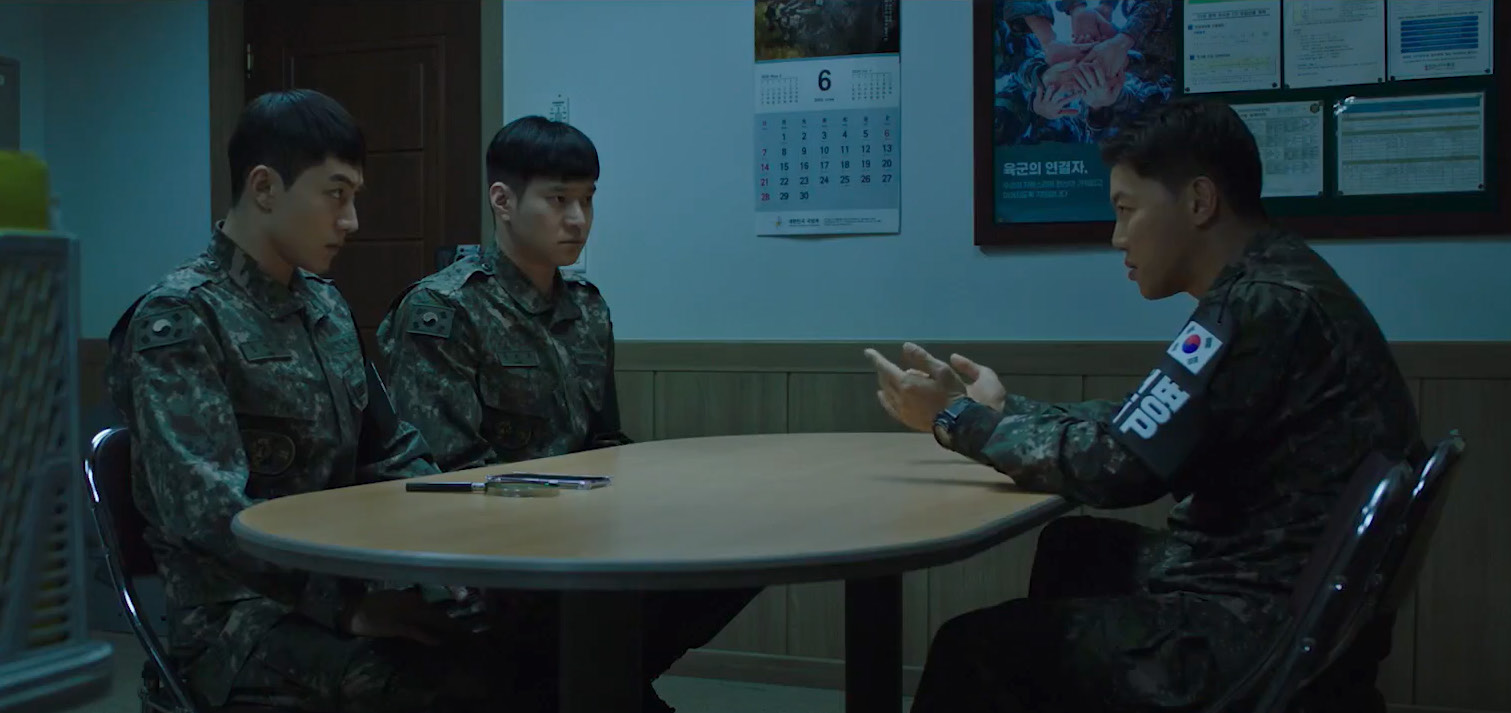
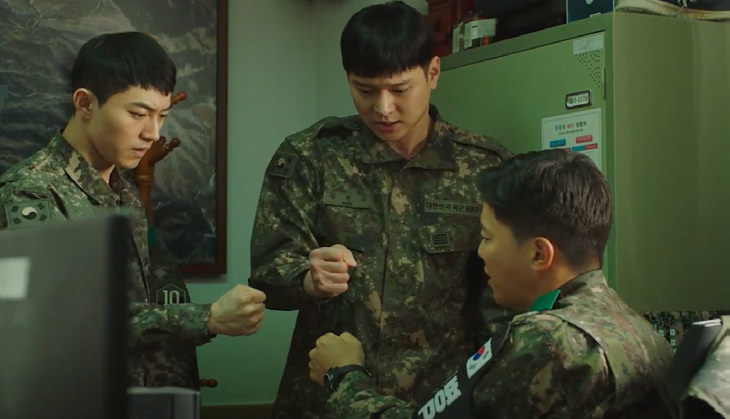
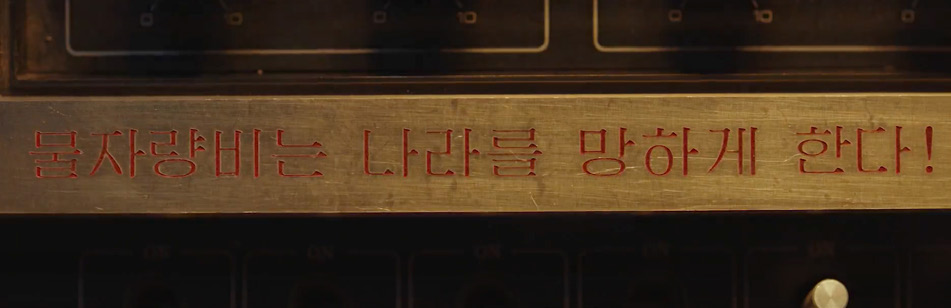
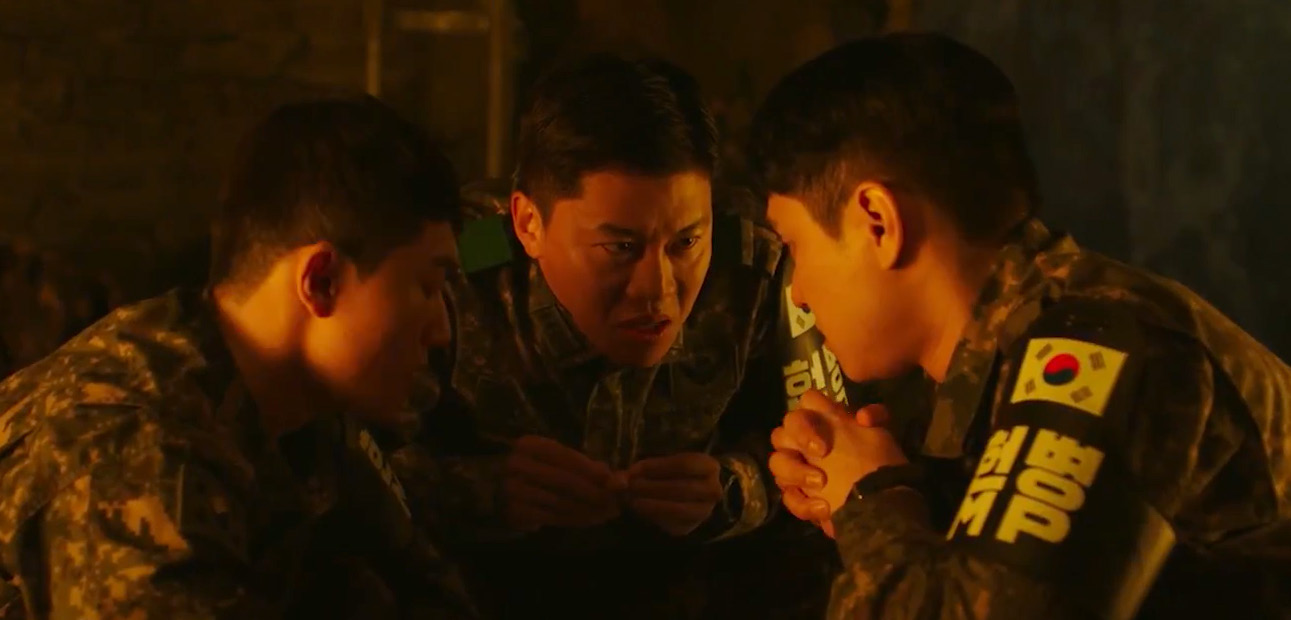
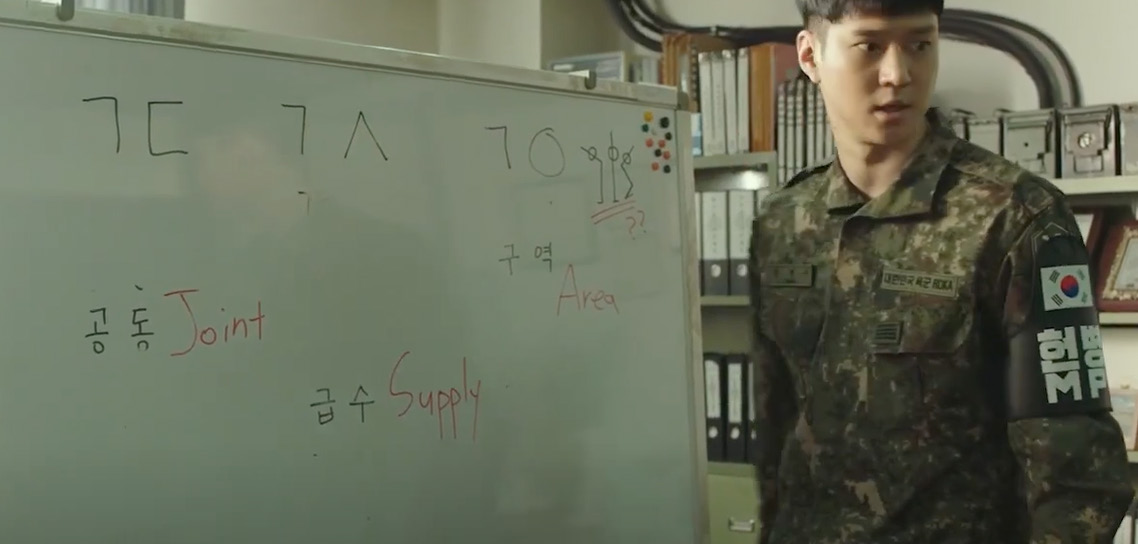
Table 1
| Kim Hyun-soo: | (ST) 박 병장님. 강아지랑 대화가 되십니까? (TT) Trung sĩ Park. Anh giao tiếp được cả với chó nữa sao? |
Table 2
| Park Cheon-woo: | (ST) 보급관님, 근무 나가십니까? (TT) Sĩ quan quân nhu, anh đang trên đường đi làm ạ? |
Table 3
| Kim Man-cheol: | (ST) 아이, 박 병장님, 그래서 목숨 걸고 철책을 넘으셨던 겁니까? 아 진짜 대단하십니다. |
| (TT) Đó là lý do tại sao anh mạo hiểm vượt qua hàng rào à. Anh thật là dũng cảm. |
Table 4
| Commander: | (ST) 많이 아프다고? 근데 왜 미친놈처럼 밤에 철책선 넘어서 싸돌아다녀?... 일단 본부 중대에 보고 올릴 테니까 병원 가서 치료부터 받아. (TT) Cậu có đau ốm gì không? Vậy tại sao cậu vượt rào qua bên kia như kẻ điên vậy?... Tôi sẽ báo cáo cậu lên trụ sở chính, thôi tới đó điều trị cho khỏe lại (너 많이 아프다고? 근데 왜 너가 미친놈처럼 밤에 철책선 넘어서 싸돌아다녀?... 일단 내가 본부 중대에 보고 올릴 테니까 너는 병원 가서 치료부터 받아). |
Table 5
| Commander: | (ST) GP 근무의 그 특성상 한 번 배치되면 3 개월 동안 누구도 밖으로 나갈 수 없다. 잘 알고 있지? |
| (TT) Một khi đã đóng quân ở đây, không ai có thể rời đi trong 3 tháng. Cậu biết mà đúng không? … | |
| (ST) 많이 고민했다. 유통 기한 1년 넘은 석은 우유를 먹여서 식중독에 걸리게 해야 되나. 하지만 깔끔하고 상쾌하게 밖으로 나갈 수 있는 방법, 니 오른 팔이든 왼팔이든 하나를 부러트려야만 밖으로 나갈 수 있다는 결론에 도달했다. 땡기는 걸로 하나 골라 봐. | |
| (TT) Tôi đã suy nghĩ nhiều. Tôi có nên cho cậu uống sữa hết hạn để bị trúng thực không. Sau đó tôi nhận ra cách đơn giản và tốt nhất để cậu rời đi. Nếu ta bẻ gãy tay trái hoặc tay phải của cậu, cậu tha hồ rời khỏi đây. Hãy lựa chọn đi. |
Table 6
| Commander: | (ST) 사람 일은 모르는 거다. 그러다 소매치기라도 당하면 어쩌라고? 그래서 준비해 봤다. 찍찍이를 붙일까 했는데 아무래도 지퍼가 나을 거 같아서... |
| (TT) Chuyện gì cũng có thể xảy ra, nếu cậu bị móc túi thì sao? Vì vậy, tôi đã chuẩn bị cái này cho cậu. Kín đáo đúng không? Tôi còn làm cả khóa kéo cho tiện. |
Table 7
| Park Cheon-woo: | ST | : 며칠 남았냐? |
| TT | : Còn bao nhiêu ngày nữa? | |
| Kim Hyun-soo: | ST | : 97일하고 15시…아니 아니…15시간 30분 남으셨습니다. |
| TT | : Còn 97 ngày 15 giờ và 30 phút nữa ạ. | |
| Park Cheon-woo: | ST | : 아직도 ? |
| TT | : Lâu thế cơ à ? |
Table 8
| Commander: | ST | : 일주일만 갔다오는 거야 |
| TT | : Ngoan nào, đi một tuần rồi về. | |
| Park Cheon-woo: | ST | : 아니, 아무리 그래도 이건 아니죠. 제가 어떻게 북한에 가요? 저기 가위바위보 해요. 남자답게 딱 한 판만, 예? |
| TT | : Kể cả vậy thế này là không công bằng! Sao lại đem thân em trao đổi qua Triều Tiên được? Thôi chơi oẳn tù tì để chốt đơn nhé ạ. Một ván thôi ạ. | |
| Kim Man-cheol: | ST | : 아... 무슨 가위바위보를… |
| TT | : Có cần thiết không ạ? | |
| Park Cheon-woo: | ST | : 빨리빨리 가위바위보 해... |
| TT | : Thôi mà oẳn tù tì, chỉ một ván thôi. | |
| Commander: | ST | : 딱 한 판? |
| TT | : Một ván ? | |
| Park Cheon-woo: | ST | : 예, 딱 한 판. |
| TT | : Dạ ! Chỉ một thôi. |
Table 9
| Ri Yong-ho: | (ST) 45개 번호 중의 6개를 맞히면 1등을 준다는 그 육사오 종이 쪼가리를 주웠는데 말이디. |
| (TT) Nghe đồn rằng nếu bốc trúng được 6 trong tổng 45 số thì sẽ thắng được tiền. |
Table 10
| Kim Man-cheol: | (ST) 자, 이렇게 맛다시를 적정량 넣어 주고요. 삭 묶어서 주물주물. 주물주물. 이제개 포인트입니다. 잘 보싶시오. 요 끝을… |
| (TT) Cho một ít Matdasi vào túi. Buộc lại rồi trộn đều lên. Trộn đều lên. Bây giờ đến phần quan trọng nhất. Hãy quan sát cênt thận. Thấy cái đầu túi không? (맛다시를 봉지에 조금 넣고 묶어서 주물주물하고요. 주물주물. 이제 중요한 부분입니가. 잘 보세요. 이 끝을 보이죠?) |
Table 11
| 시간 | 화자 | 대사 |
|---|---|---|
| 00:00 | Soldier 1: | (ST) 빨리빨리 움직여! 사대 위치로! (TT) Nhanh! Tất cả vào vị trí! |
| Soldier 2: | (ST) 탄 박스 어서 받아, 빨리빨리 (TT) Lấy đạn đi, nhanh! | |
| 32:40 | Commander: | (ST) 보급관이 그려 준 약도 좀 줘 봐 (TT) Đưa cho tôi bản đồ mà bên quân nhu đã vẽ đi |
| 33:04 | Commander: | (ST) 조정간 단발! (TT) Rút súng ra đi |
| 33:40 | Political instructor: | (ST) 총 내리라우 (TT) Hạ súng |
| Commander: | (ST) 총 내려 (TT) Hạ súng | |
| 35:53 | Political instructor: | (ST) 다들 일나라우 (TT) Về thôi các đồng chí |
| 47:17 | Park Cheon-woo: | (ST) 신병, 물 한 잔 갖고 오라 (TT) Tân binh, mang một cốc nước tới đây! |
| 47:48 | Political instructor: | (ST) 다시 해보라우 (TT) Thử lại lần nữa! |
| 59:11 | Training commander: | (ST) 신병! 나오라! 불굴의 혁명 정신으로 단전에 힘을 딱 주고 냅다 아랫배로 돌덩이를 까부수는 거야! (TT) Lính mới! Bước tới trước! Với tinh thần quyết tâm đầy mình, hãy siết chặt bụng lại. Sau đó phá vỡ tảng đá. |
Table 12
| Park Cheon-woo: | (ST) 자유 대한에 오신 것을 환영합니다. |
| (TT) Chào mừng đến với vùng đất của sự tự do (Welcome to the land of freedom). |
Table 13
| Ri Yong-ho: | (ST) 이 남조선 아새끼 누구를 핫바지로 보네? (TT) Khôn như cậu quê tôi xích đầy ra nhé. |
Table 14
| Park Cheon-woo: | (ST) 야, 찾았으니까 다행이지. 이거는 하늘이 도운 거야. (TT) Tôi thật may mắn vì tìm ra tấm vé, chắc được các cụ phù hộ |
Table 15
| Commander: | 그 로또 주웠다는 북한 놈이 어떤 놈이야? |
| Park Cheon-woo: | (ST) 개새끼입니다. 개새끼예요. (TT) Một kẻ sống không sợ nghiệp quật ạ. Không duyên được miếng nào |
Table 16
| Commander: | 저 새끼들 진짜 로또 태울 수도 있어. |
| Kim Man-cheol: | (ST) 저렇게 무식한 놈들 처음 봤습니다. (TT) Thế thì còn cái nịt. Họ suy tính thiển cận quá. |
Table 17
| Park Cheon-woo: | Ri Yong-ho 하사는 부자 되면 뭐 할거야? |
| Ri Yong-ho: | (ST) 나야 뭐, 이것 저것 할 거 많디 (TT) Nhà bao việc ấy |
Table 18
| Commander: | 8대2. 정말 많이 양보했습니다. |
| Ri Yong-ho: | (ST) 그 거저먹겠다는 심보는 미제 승냥이들한테 배웠어? (TT) Bộ muốn ăn giầy, ăn tất, ăn cả đất xung quanh à |
Table 19
| Commander: | (ST) 너 혹시 밤에 도깨비 같은 거 만나서 씨름하고 그런 거냐? |
| (TT) Cậu có mò ra ngoài vào ban đêm để cắt duyên âm gì đó không |
Table 20
| Commander: | (ST) 협상은 원래 붙였다 깨졌다 하는 거야 |
| (TT) Ông trời không phụ ai đâu, hay làm thì giàu, có chí thì nên |
Table 21
| Commander: | (ST) 또 그 벼랑 끝 전술 |
| (TT) Tức nước vỡ bờ đấy |
Table 22
| Political instructor: | (ST) 찾아온 걸 보니 삶은 닭대가리는 아니구먼 |
| (TT) Các anh tới được đây, tôi thấy các anh cũng không phải dạng óc bã đậu |
Table 23
| Park Cheon-woo: | (ST) 당신들 아오지 탄광에 안 간 걸 다행인 줄 알아 |
| (TT) May phước 3 đời nhà các người chúng tôi còn chịu ngồi đây đàm phán. |